I have had the privilege of meeting some amazing songwriters over the years. It began with a serendipitous trip to Nashville’s Bluebird Café in 1994. On our way back from a mission trip, we stopped for the night, and our host, who had connections, believed we should experience a listening room. I immediately fell in love with it. It felt like we were eavesdropping on a circle of friends who wrote poems set to music, each telling a complete story in three minutes. It felt like church.
I kept returning to that holy place, sometimes bringing students, friends, and family. It never got old. The songwriters were very approachable, and I was always amazed that they let me share the impact their songs had and how I used them as conversation starters with students. Perhaps because I had no interest in writing songs myself, I never asked them to listen to one of my creations or to introduce me to their friends to advance my career. I simply appreciated the songs and the people who created them.
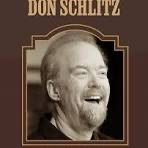
If you went often enough, you began to know the renowned writers, the ones other songwriters sat transfixed as they sang. One of those was Don Shlitz. He created the in-the-round style of song presentation right at the Bluebird. There was all kinds of lore around him. He wanted the cover charge at the door on the nights he played to be as low as possible, and he liked to play with people he knew and trusted. He often played with his friends, Thom Schyler and Tony Arata. It was amazing to hear him play hit after hit with a very soft vibrato. There was nothing brash or conceited about his demeanor.
Still, that did not explain the disproportionate sense of grief I felt when the unexpected news of Don Shlitz’s passing came out last week. It was as if there were a bruise on my soul whenever I thought about it. Then I remembered the night I actually spoke to him at the Bluebird. He mentioned that he was from Durham, NC, and that he graduated from a rival high school the same year I did. I went up to him after the set, introduced myself, and said I was from Hillsborough and had graduated from Orange High the same year he did. Then, with no preamble, I asked, “Where were you the night that Martin Luther King was assassinated?” It took a moment, then he said, “I was working at the Northgate movie theater, and it was my job to get everyone out in an orderly fashion.” “That was a terrifying night,” I said.
We both harkened back to that moment. There was so much anger and pain spreading across the country, but it had already been a painful year for the young people in the area. Adults made decisions that affected us in ways they did not have to experience. After school was out for the summer, the school administration announced that they were closing the county’s school where the black students attended. Then they set up scenarios that were not good for any student in the school. They brought their power plays and prejudices to the table without giving thought to how it would play out in our halls.
Some of the local KKK members positioned themselves at the high school gates, armed with guns and unmasked. I saw a deacon from a church I used to attend standing there. We had bomb threats so often that they ate into our snow days, and then we had a stabbing in the hallway as all of us tried to get to class. Our lives were in chaos.
Miraculously, our high school won the state basketball tournament that year, thanks to an influx of incredibly talented players from the closed high school. Within one school year, we went from half the student body entering as second-class citizens to having one of the basketball team’s stars elected Student Body President. There is much more to this story, but as we were beginning to believe we would survive the year, Martin Luther King was assassinated, and literal hell broke loose in Durham that night.
Molotov cocktails were thrown into stores in West Durham. Both of my parents worked on that street. One business was burned, and the other was targeted but not damaged. I do not remember feeling anger toward the rioters, but rather confusion about how we got to that moment. I remember feeling helpless and exhausted. I also remember thinking that until a year ago, my life had seldom been confronted with, or even acknowledged, the existence of this pain. I also had to confess that people I now knew personally had dealt with this and much more all their lives.
When I connected with Don Shlitz that night at the Bluebird, I knew we had both looked into the eyes of people we thought we knew, only to be disappointed. We encountered a wall of hatred we had mostly been sheltered from, and our world could never return to our pre-innocence. I heard all of that in the songs he wrote. The balance of naivety and naked truth. His death marks the loss of a warrior who saw the good in this world, yet, knowing the underside of humanity, chose hope and promise. There is a scarcity of warriors who remind us to live our lives fully and to speak the truth in a melody that will catch your ear and will not let you go. That is why I was disproportionately saddened by his passing. Thank goodness he left us that spirit in his songs.
 The Many Thoughts of Wanda Kidd
Leave a comment